-
A Closer Look at the Layers of London
Journal · Exhibitions · 10 September 2026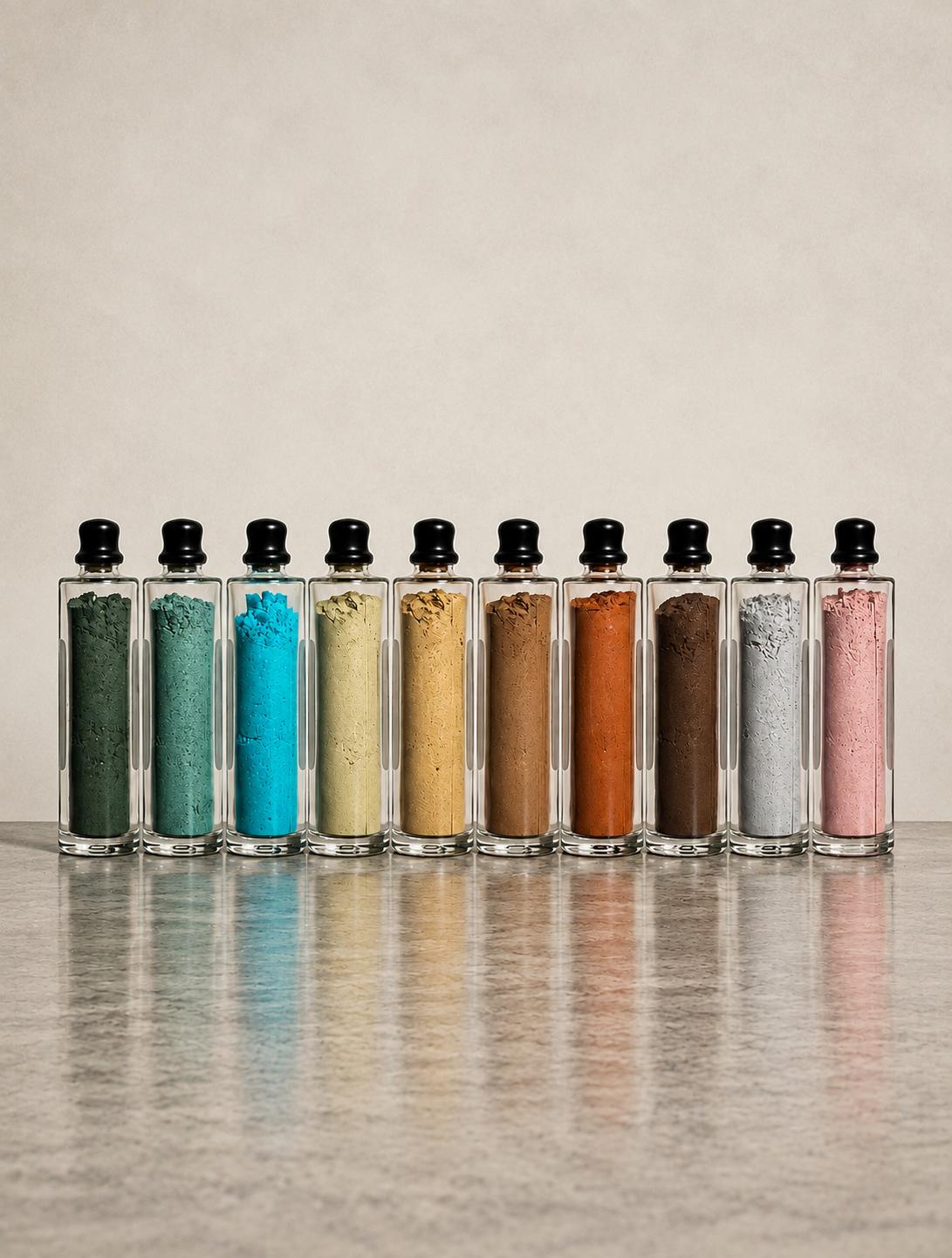
Polly Bennett of POLBEN's Pigment made a ten-colour palette from London itself.
It is the starting point of Layers of London, General Assembly's exhibition at 12 St George Street, 9 September – 3 October 2026.
General Assembly and POLBEN's Pigment present Layers of London, an exhibition that considers the city through what it leaves behind: its earth and minerals, buildings and industries, memories and human lives. Layers of London began with a collection of pigments made from London itself. Polly Bennett gathers something from the city and transforms it into pigment. These materials were then shared with artists working across different disciplines, each invited to navigate their own path. Here are the ten colours of the palette, and where each one came from.
Epping Forest Ochre is an earth pigment composed of clay, sand and silica. Iron-oxide rich ochre is one of the oldest known pigments. One of the earliest examples is a 73,000 year-old drawing found on a rock fragment in South Africa. Polly purified the pigment through washing the sediments with water to separate and refine them.
Whipps Cross Raw Sienna is an iron-rich sandy clay found in the banks of Hollow Pond off Whipps Cross Road where vibrant red, orange and purple sediment is visible. Composed of hydrated iron oxide, clay, silica and manganese oxides, Raw Sienna is distinguished from ochre by its transparency. Its name reflects its close resemblance to the traditional Raw Sienna pigment, historically mined in Siena, Italy.
Whipps Cross Burnt Sienna is a rich orange ochre made by calcining the iron-rich pigment found at Hollow Pond off Whipps Cross Road. To make this pigment, Polly pushed the Raw Sienna counterpart further through dehydration, converting the mineral goethite into hematite.
Yellow Stock Brick is a classic building material made from mixing London clay with sand, ash and coal. Developed by brickmakers in the late 18th century, the bricks' bright yellow hue comes from the firing process affecting the clay. The ash makes the texture porous and the coal produces a weathered "coal-spotting" texture. To create this pigment, Polly mud-larked eroded stock bricks from the Thames and Isle of Sheppey, where the material had travelled downstream from London.
Blue Verditer is a synthetic copper carbonate pigment produced from copper-rich solutions and chalk at cooler temperatures. When England became the leading producer of Verditer in the 17th and 18th centuries, it was offered as a more affordable alternative to ultramarine and azurite. Although chemically identical to its counterpart, Green Verditer, it arises from a different crystal structure.
Green Verditer is a synthetic copper carbonate pigment and is the result of copper-rich solutions reacting with chalk under heat and stirring, unlike Blue Verditer. In the 17th and 18th centuries, England became the leading producer of both Green and Blue Verditer, although the distinction between the two was not understood until the 1980s. The colour of both verditers emerges from the particular crystalline architecture into which the copper is organised.
Madder is a natural red dye made from the roots of the madder plant, that was developed commercially in Britain in the 18th century. Chelsea Physic Garden head gardener, Philip Miller was a loud supporter of its value as early as 1734. There is evidence of it being used by the Indus Valley Civilisation in 2000-2500 BCE and was later refined by Islamic caliphates to produce the celebrated "Turkey Red." Later still madder was used to dye the coats of the British Army.
Weld is a yellow dye plant foraged in South London that originated in the Mediterranean. Weld thrives in the sunny, alkaline soils of London. The pigment is made by stimulating the plant dye with alkali and binding it to a mordant, producing finely ground crystals.
Bone White is produced by burning away the organic matter on animal bones and leaving their inorganic structure intact. Polly forages bones throughout London from food waste, roadkill, and the historic Thames slaughterhouse waste. She removes the flesh through boiling and degreasing before incinerating them. The result is a very brittle white bone which she grinds down to a pigment.
Bone Brown is produced by partially carbonising animal bone. The bone is removed from the heat before it becomes fully carbonised into black char. A sealed container used to limit oxygen, causes the matter to vaporise while the bone develops a warm, rich brown colour. This is one of the most ancient pigments and is visible in cave paintings around the world.
About POLBEN's Pigment
POLBEN's Pigment is an artist-led project and pigment company founded by environmental artist Polly Bennett. Rooted in principles of sustainability, sensory engagement and place-based practice, POLBEN's Pigment explores the alchemy of natural colour through foraged, locally sourced and often waste or recycled materials.
From a young age, Polly has been a collector of found objects, a practice that evolved into a commitment to reusing, repurposing and recycling materials within her art. Today, she seeks out both mineral and botanical pigments, often foraging in the countryside, where she gathers discarded and natural materials that yield a rich and unexpected spectrum of colour. Her findings include bone, industrial debris, shells and rusted metal, each contributing to a unique material archive of place and time.
She hand-mixes her colours using pigments collected from across the world, with a particular focus on her locality in Britain. Her growing pigment collection is slow-made and deeply intentional. She also creates water-based inks from plants and organic matter, experimenting with natural additives to produce a range of tones from single ingredients.
Each pigment crafted through POLBEN's Pigment tells a story of soil, weather, species, history and transformation. The project is centred around cultivating a more ethical and regenerative relationship with the materials we use, and recognising our entanglement with natural and industrial systems.
In 2025 Polly partook in the General Assembly Loire Valley Summer Residency, making a colour palette of Azay-le-Rideau, the location of the residency. This project seeded the idea for Layers of London, and the development of the ten-colour pigment palette using plants, minerals and processes associated with London.
See more
- Layers of London exhibition
- Polly Bennett's artist page: Polly Bennett
Details:
Author: General Assembly · Date: 10 September 2026 · Category: Exhibitions · Related: Polly Bennett; Layers of London · Photo: Melanie Ashton
-
Sabine Pigalle at Darkroom, White Canvas
Journal · Exhibitions · 15 July 2026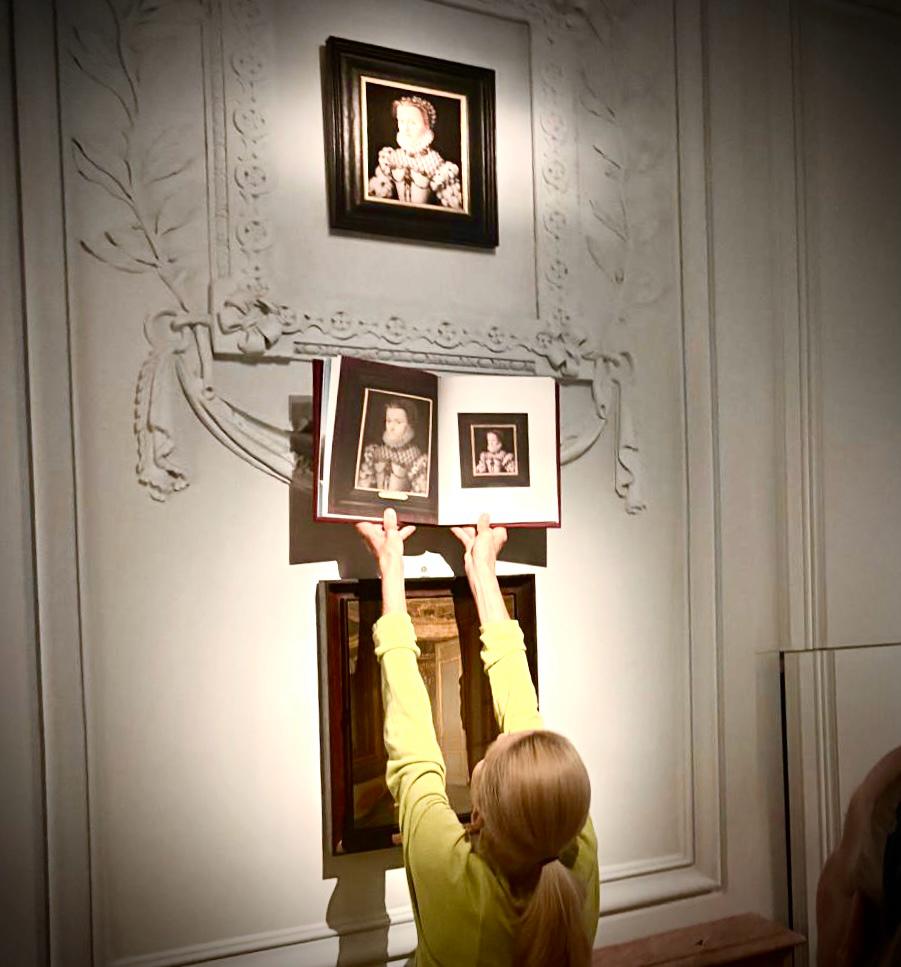
Sabine Pigalle’s works are included in Darkroom, White Canvas.
Sabine Pigalle’s works are included in Darkroom, White Canvas. Photography Facing Painting, a summer exhibition at the Museum of Modern Art and the Royal Abbey of Fontevraud that marks 200 years of photography.
Sabine Pigalle, whom General Assembly represents in the United Kingdom and France, is showing at the Museum of Modern Art Fontevraud in a major summer group exhibition, Darkroom, White Canvas. Photography Facing Painting, on view until 3 October 2026.
The show marks the bicentenary of the birth of photography by looking back at two centuries in which photography and painting have borrowed from, challenged and reshaped each other. Photography took on painting's formats, codes and ways of working. Painting, in turn, had to rethink its role as a means of representing the world once the photographic image arrived. The curators treat the border between the two as porous.
The exhibition focuses on photographers whose work looks toward painting. The artists were chosen for how they resonate with the museum's permanent collection and with the site itself. The exhibition includes works by Julia Margaret Cameron, Eugène Atget, Man Ray, Brassaï, Henri Cartier-Bresson and André Kertész, to painters and image-makers including Edgar Degas, Eugène Delacroix, Gerhard Richter, David Hockney and Anselm Kiefer, as well as contemporary artists including Bill Viola, Thomas Struth, Viviane Sassen, Sarah Moon and Sabine Pigalle.
Pigalle's Cabinet of Illusions (Le Cabinet des Leurres) is installed in the Logis de la Grande Prieure, the residence of the Grand Prioress, next to the nuns' dormitory. It shows the marriage of photography and painting through the idea of citation. The Cabinet of Illusions was previously installed in the celebrated Clouet cabinet at the Musée Condé in Chantilly, placed discreetly among the old masters' paintings, a contemporary intervention inside the historic cabinet. That presentation was made under the guidance of the museum's director, Mathieu Deldicque.
Pigalle's work sits between classical painting, mythology, memory and contemporary image culture, which puts the show's central question, how photography and painting look at each other, close to the centre of her practice.
See more
- Read the announcement of our representation of Sabine Pigalle
- See Sabine Pigalle's works on her page on the General Assembly website
- About the exhibition at the museum:Chambre noire, toile blanche at Fontevraud
Details: Author: General Assembly · Date: 15 July 2026 · Category: Exhibitions · Related: Sabine Pigalle representation announcement · Photo: [credit] Melanie Ashton
-
General Assembly announces representation of Sabine Pigalle
Journal · Artists · 17 June 2026
General Assembly is pleased to announce the representation of Sabine Pigalle in the United Kingdom and France.
Known for her psychologically charged and meticulously constructed works, Pigalle's practice occupies a singular position between classical painting, mythology, memory and contemporary image culture. Across a career spanning over three decades, she explores themes of identity, transformation, mortality, beauty and the instability of historical narrative.
Her works are held in public and private collections internationally. Her ability to merge references from classical art, photography, literature, religion and mythology has established Pigalle as one of the most distinctive voices in contemporary French art.
"There is an extraordinary lightness within Sabine's work. Though intellectually layered and historically informed, the works carry their depth with ease, embodying both reverence and subtle, poetic whimsy."
Melanie Ashton, Founding Director, General Assembly London
On view now
Pigalle's Cabinet of Illusions is currently on view at the Museum of Modern Art Fontevraud, France, in a major group exhibition alongside works by Anselm Kiefer, David Hockney, Bill Viola, Gerhard Richter, Man Ray and Henri Cartier-Bresson, among many others. It underscores her enduring relevance within dialogues surrounding photography, memory, mythology and the construction of the image across generations.
See more
- See Sabine Pigalle's works on her page on the General Assembly website
Details: Author: General Assembly · Date: 17 June 2026 · Category: Artists · Photo: [credit]
-
General Assembly announces representation of Ranny Macdonald
Journal · Artists · 13 May 2025
General Assembly is pleased to announce the representation of London-based painter and musician Ranny Macdonald.
General Assembly is pleased to announce the representation of London-based painter and musician Ranny Macdonald, whose paintings see the city through the eyes of its dogs and pigeons.
In November 2024, Macdonald's work was the subject of a celebrated solo exhibition, One Small Step, at General Assembly London. He has recently returned from the Royal Drawing School's residency in Pignano, Italy, and this summer he will join the gallery's Loire Valley Summer Residency.
By seeing through the eyes of the city's dogs and pigeons, or in still life paintings of anthropomorphic flowers, Macdonald's works create a space to consider our relationship with "Nature", or the more-than-human world.
Their visual language draws from early Pixar as much as the history of painting. Yet the works are materially grounded through the use of local earth pigments. This constraint enables a form of embodiment that connects subject and medium, and celebrates the potential of unprocessed colour.
Macdonald is a graduate of the Royal Drawing School's postgraduate programme and has since exhibited nationally and internationally. In 2023 he was selected for the Bloomberg New Contemporaries, which showed at Camden Art Centre, London, and Grundy Art Gallery, Blackpool.
See more
- See Ranny's works on his page on the General Assembly website
Details:
Author: General Assembly · Date: 13 May 2025 · Category: Artists · Related: Loire Valley residency